Who this is for
- Candidates who pause while searching for ideas.
- Learners who translate complete sentences before speaking.
- Students whose short answers limit their speaking performance.
Improve IELTS speaking fluency
To improve IELTS Speaking fluency, practise speaking continuously on familiar topics, record and review hesitation patterns, then repeat answers with clearer idea links. Fluency means sustained, understandable speech—not speaking as fast as possible.
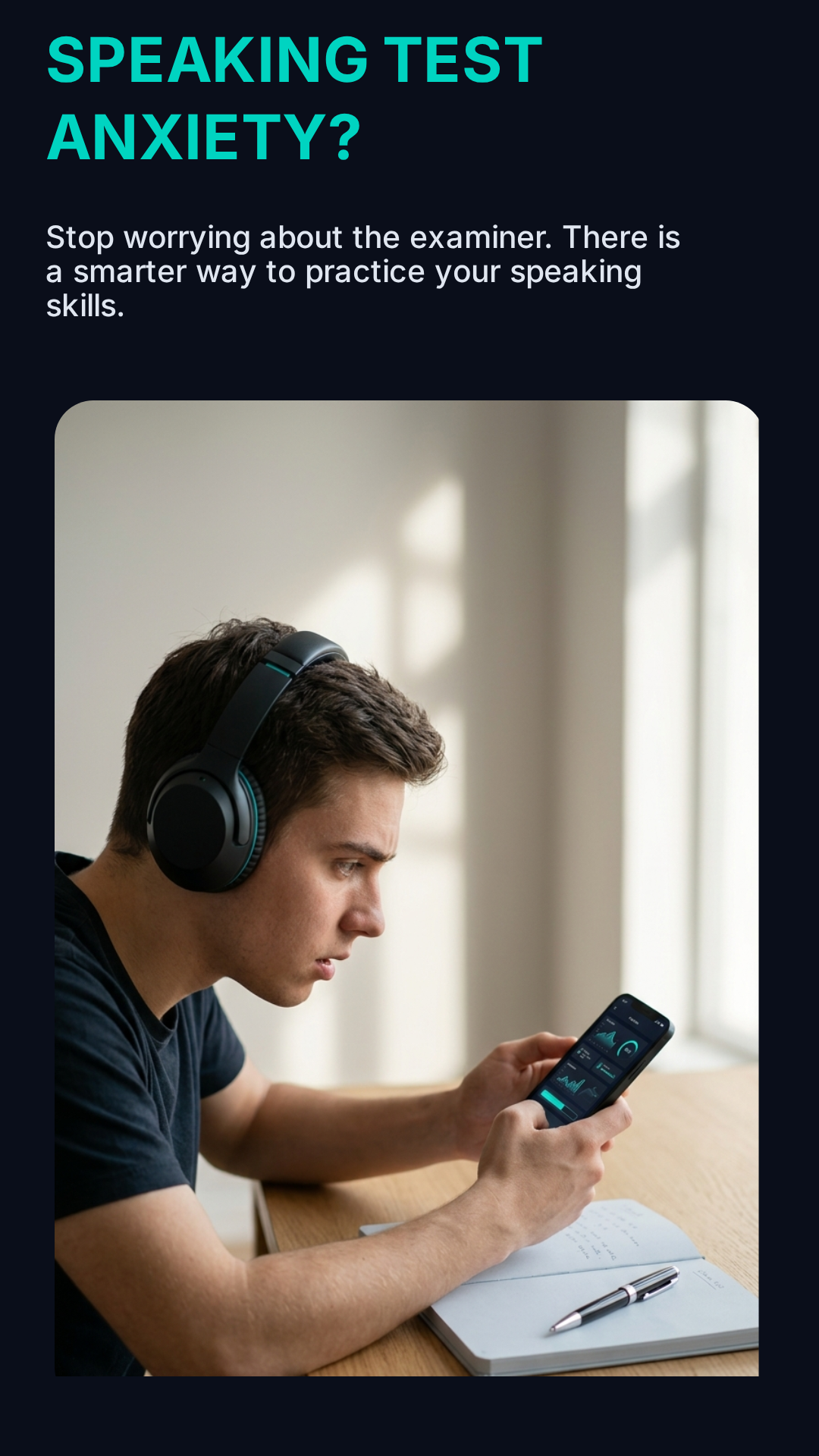
You may pause because you have no example, or because you cannot retrieve a word. Record short answers and label the cause of each long hesitation.
For idea pauses, practise a simple answer route: response, reason, example, result. For vocabulary pauses, practise paraphrasing the missing word instead of stopping.
Answer the same question more than once. On the second attempt, keep the ideas but improve transitions, vocabulary accuracy, or sentence control.
Then change one detail or ask a related question. This develops flexible language patterns rather than memorising one response.
A word list does not prepare you to retrieve language during a conversation. Store useful words with collocations and a sentence you can say naturally.
Practise a small set across several questions. Accurate reuse builds active vocabulary more effectively than collecting many unfamiliar expressions.
Supplies varied questions for daily drills.
Identifies repetition and weak answer development.
Supports immediate re-recording after feedback.
Record three short answers on one topic.
Mark long pauses and repeated fillers.
Choose one idea structure and five useful phrases.
Repeat the answers and compare clarity.
If “Do you enjoy cooking?” produces a short yes, extend it with a reason, a recent example, and a result: what you cooked, why, and what you learned.
No. Aim for a natural, understandable pace with connected ideas. Speaking too quickly can reduce clarity and control.
Use timed questions, record answers, review one weakness, and repeat. A transcript can also reveal fillers, repetition, and incomplete sentences.
This page is reviewed July 2, 2026 and maintained for IELTS practice guidance. Use it as a study reference, then continue with in-app feedback loops.