Who this is for
- Candidates who stop before two minutes.
- Learners whose Part 2 answers lose structure.
- Students who need independent cue-card practice.
IELTS Speaking Part 2 practice
Effective IELTS Speaking Part 2 practice combines a one-minute keyword plan, a logically ordered answer, timed recording, and a second attempt after feedback. Do not write full sentences during preparation or memorise complete answers.
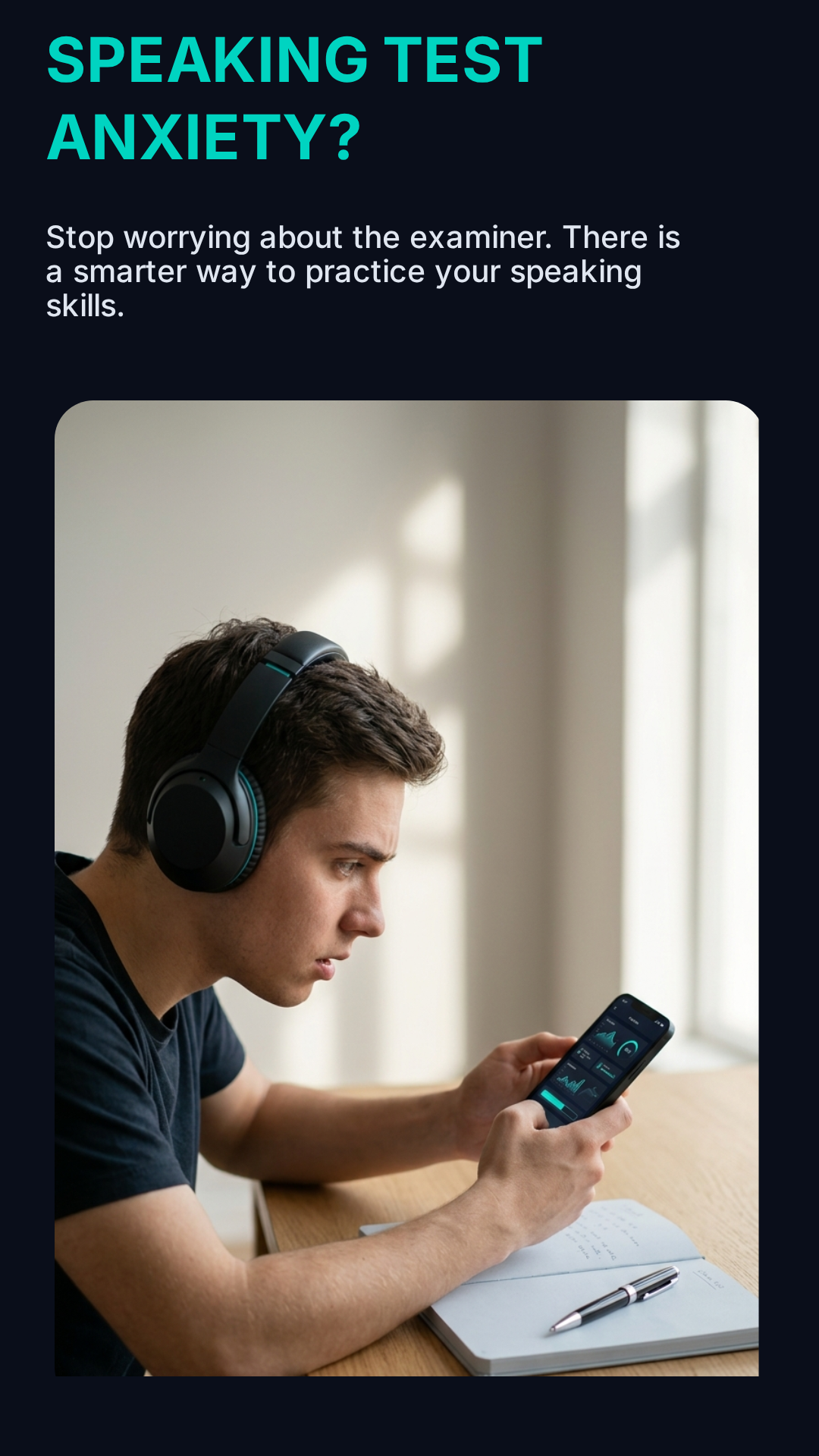
Part 2 gives you one minute to prepare and asks you to speak for one to two minutes. A short note map is faster to read while speaking than complete sentences.
Choose a beginning, two or three details, and an ending. Add keywords for a person, place, feeling, reason, or result that can restart your answer if you hesitate.
Recording once measures your current performance. Repeating the cue card after review creates the improvement.
Listen for one weakness at a time: long pauses, repeated vocabulary, unclear sequence, grammar errors, or flat pronunciation. Make one change and record again.
Examiners can change the topic and follow-up questions, so fixed speeches are fragile. Practise adapting the same experience to several related cue cards.
A story about a useful gift, for example, may help you practise people, objects, memories, and celebrations while still producing a fresh response to each prompt.
Provides cue-card prompts for repeated practice.
Reviews fluency, coherence, and vocabulary use.
Turns feedback into an immediate second attempt.
Choose a Part 2 cue card.
Make a keyword plan for one minute.
Record a one-to-two-minute answer.
Review one weakness and record the answer again.
For “Describe a person who helped you,” note the person, situation, action, result, and feeling. These five keywords create a natural sequence without scripting every sentence.
You are asked to speak for one to two minutes. Practise continuing logically until the examiner stops you.
Yes. You receive one minute to prepare and can make notes. Keywords are usually easier to use than full written sentences.
This page is reviewed July 2, 2026 and maintained for IELTS practice guidance. Use it as a study reference, then continue with in-app feedback loops.